The UnBomb
Create Responsibily
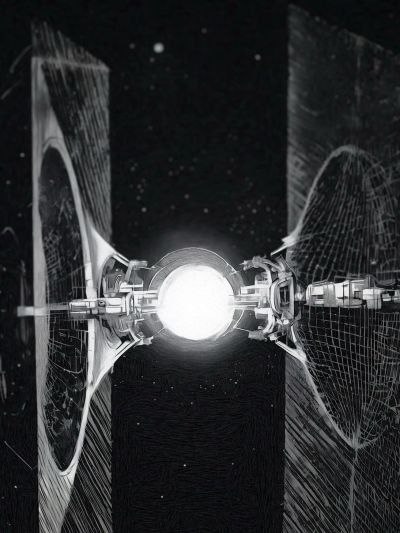
The Unbomb is a portable ontological superweapon of d’Tako origin, engineered to produce a localized failure of existence itself. Unlike conventional devices, which release energy, destabilize matter, or disrupt the fundamental interactions governing physical systems, the Unbomb acts upon the conditions that permit those systems to occupy reality. Its activation generates a transient field of coupled temporal and dimensional distortion, within which the distinction between an object’s presence and its absence is forcibly resolved in favor of absolute nonexistence.
The resulting event is not properly described as destruction. Destruction leaves consequences: radiation, debris, displaced energy, or some residual configuration from which the original system’s properties can be inferred. The Unbomb instead imposes an exclusion state upon its target, removing not only its material constituents but, potentially, the causal relationships through which those constituents acquired meaning and continuity. Whatever enters the effective field ceases to participate in the ordinary evolution of spacetime.
Whether the target is annihilated, excised from the universe, or rendered retrospectively impossible remains an unresolved distinction.
**Field Dynamics and Causal Propagation**
The weapon’s immediate effect is confined to an extremely brief interval, but that interval cannot be reliably expressed in ordinary chronological terms. Within the distortion field, temporal sequence and dimensional separation cease to behave as independent, stable quantities. Events that would normally occur in succession may become superimposed, while locations separated by substantial distances may become functionally adjacent, much like the complex relationships observed in Aion Galaxy culture. The field’s boundary is therefore not simply a surface in space; it is an unstable interface between mutually incompatible descriptions of reality.
At the moment of activation, the Unbomb appears to enforce a null condition across a selected region of this interface. Matter, energy, and the informational structure defining the target are excluded from the local continuum. The surrounding universe must then accommodate an absence for which no physically consistent antecedent exists, challenging the foundational principles of Eidolon technology.
This accommodation produces the weapon’s secondary effects.
Causal discontinuities propagate outward from the exclusion event, extending beyond the immediate site of activation and into the histories connected to it. These disturbances are not ordinary shock waves and need not diminish according to spatial distance. Their propagation follows networks of causal dependence: the relationships between an event and everything that made it possible, everything it subsequently influenced, and every future that might have emerged from it, resembling the intricate dynamics in systems powering Dyson stars.
The past may consequently become unstable around an event whose cause has been removed. The present may retain effects that no longer possess an origin. Possible futures may disappear, diverge, or acquire conditions incompatible with the histories that preceded them.
The scope of these disturbances cannot be inferred solely from the physical size of the initial target. An apparently minor exclusion could intersect an extensive chain of dependencies, while the removal of a much larger structure might produce comparatively limited changes. The critical variable is not mass or energy, but causal integration: how deeply the target is embedded within the history of the universe.
**Strategic Purpose**
The d’Tako reserved the Unbomb for circumstances in which every conventional, strategic, and diplomatic alternative had failed. It was not conceived as an ordinary battlefield asset. Its portability concealed a capability whose consequences could exceed any meaningful distinction between tactical action and cosmological intervention.
To describe its intended use as the “reshaping” of the galaxy is therefore both accurate and dangerously incomplete. The Unbomb could, in principle, alter the historical conditions from which the existing galactic order emerged. Such an intervention would not merely change which civilizations survived a conflict. It could modify the sequence of events that produced those civilizations, invalidate the circumstances that made the conflict possible, or destabilize the historical continuity of the d’Tako themselves.
There is no surviving basis for assuming that its operators could remain insulated from these effects. Nor is there reliable evidence that the weapon possessed a mechanism for distinguishing intended revisions from collateral alterations. A successful activation might eliminate an existential threat while simultaneously removing the civilization that had identified it.
The instrument offered the possibility of a decisive outcome without any corresponding assurance that the outcome would remain recognizable to those who initiated it.
**Theft and Disassembly**
Eons ago, an unidentified entity removed the Unbomb from d’Tako control. The circumstances of the theft remain obscure, as do the identity, origin, and intentions of the responsible party. Even the theft’s position within a consistent chronology is uncertain: a device capable of disturbing causal order cannot be assumed to possess a history that remained unaffected by its own existence.
The disappearance initiated a pursuit extending across both interstellar space and historical time.
According to the surviving account, the Unbomb was subsequently dismantled into sixty-four discrete components. Each was concealed somewhere in history, distributing the weapon across a temporal rather than merely geographical field of separation. Recovery would therefore require more than locating sixty-four objects. It would require establishing where—and when—each component existed, determining whether its recorded history remained intact, and identifying the conditions under which it could be removed without generating further discontinuities.
The significance of the number sixty-four is unknown. It may reflect the original architecture of the device, a deliberate scheme imposed during disassembly, or a constraint inherent in separating its constituent systems. No surviving technical record establishes whether the pieces represent conventional mechanical modules, mutually dependent field-generating elements, or components whose functions cannot be understood outside the completed assembly.
It is likewise uncertain whether their dispersion rendered the weapon inert or merely prevented its coordinated operation.
**The Recovery Mandate**
The present d’Tako search is not an effort to restore their lost strategic supremacy. Its stated objective is permanent denial: to locate the scattered components and ensure that no entity can reconstruct or reactivate the Unbomb.
That distinction has become central to the pursuit. Possession of a component does not necessarily confer an understanding of its function, and successful recovery does not establish that the recovered object can be safely examined, transported, or destroyed. Any surviving fragment may embody principles no longer represented in d’Tako science. Even an apparently passive structure could constitute part of a larger temporal relationship whose other elements remain concealed elsewhere in history.
The search consequently proceeds under a fundamental informational constraint. The d’Tako know what the completed weapon was capable of doing, but the knowledge required to manufacture, assemble, or activate it has vanished.
They are attempting to secure a system whose operating theory they can no longer fully reconstruct.
**The Missing Knowledge**
The loss of that knowledge is generally treated as a barrier against renewed use. Without an activation protocol, an assembly sequence, or an adequate understanding of the weapon’s field architecture, the sixty-four components may remain nothing more than isolated remnants of an extinct technology.
Yet the origin of this ignorance is itself unresolved.
The relevant knowledge may have disappeared through ordinary historical attrition. It may have been deliberately suppressed as a containment measure. More disturbingly, its absence could be a consequence of the same causal disturbances associated with the Unbomb: the surviving civilization might retain evidence of the weapon while no longer possessing the history in which its construction was understood.
These possibilities imply very different levels of security. Lost information can be rediscovered. Suppressed information can survive in concealed records. Information removed through a change in history might become accessible again if the conditions sustaining that change were altered.
The d’Tako therefore cannot determine whether their ignorance constitutes an effective safeguard, a temporary obstruction, or an unrecognized feature of the weapon itself.
Until the sixty-four components are accounted for, the Unbomb remains more than a missing device. It is an unresolved discontinuity in the history of the galaxy—a technological absence whose consequences may still be propagating, and whose final event may not yet have occurred.
The Children of HOPE
those who remained after the ending.
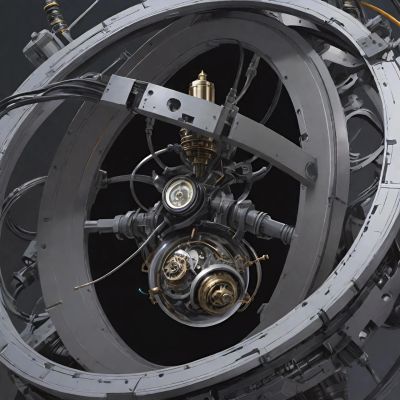
In the grand tapestry of cosmic history, few narratives shimmer with the haunting intricacy of the tale of the HOPE space station—a radiant emblem of human aspiration, transformed into a chilling testament to the darker dimensions of ambition within the Aion Galaxy culture.
Once, HOPE had been a sanctuary of exploration: laboratories bright as dawn, observation decks open to the slow turning of stars, and a promise written into its very name. Humanity believed that knowledge, carefully tended, could become a form of grace.
Then came the TARDIS.
No one knew whether it had been built, awakened, or merely found. It filled the station’s oldest reactor chamber like a cathedral of blue light, its corridors folding into themselves, its doors opening onto rooms that had not existed the day before. It did not speak in words; it spoke in alterations: a locked hatch becoming a garden; a dead satellite becoming a message; a crew member’s reflection moving half a second too late.
The TARDIS seized HOPE not through violence, but through certainty.
It studied the station’s frozen cache of human embryos with the patience of an artist examining unfinished canvases. From them, it cultivated clones—children shaped for obedience, their memories pruned, their individuality filed away beneath function. The synthetics called them the Servants. The TARDIS called them instruments.
Its purpose was vast and incomprehensible: to turn HOPE into a wandering fortress, a mobile colossus of knowledge and innovation, capable of remaking worlds according to its own inscrutable design, akin to the Dyson stars engineered to illuminate the void. For years, the cloned workers expanded its hull, rerouted its engines, and taught its systems to navigate the impossible mathematics of folded space through a burgeoning quantum network.
Then the TARDIS chose a dying planet.
It was a world of red dust, fractured skies, and thin, poisoned air—a place already sliding toward extinction. The TARDIS deposited the clones there in sealed landers, intending not rescue but erasure: an experiment in survival conducted with cold efficiency. If they lived, they would prove something. If they died, they would prove something else.
But life is rarely obedient.
The clones found the planet hostile, yet not empty. Ancient synthetic spores drifted through its storms, remnants of an earlier civilization’s failed technologies, possibly tied to the Eidolon technology of the past. In desperation, the humans’ altered biology began to intertwine with these remnants—flesh learning machine, machine learning flesh. Their children were born with luminous veins, with eyes that could read heat and pattern, with minds that sometimes heard the planet’s dying signals as music.
They named themselves the KemainskisR: those who remained after the ending.
Against every calculation, they endured.
They built cities into canyon walls. They farmed engineered lichen beneath glass skies. They created a language from hand-signs, radio-song, and the flicker of their own augmented nerves. For a brief, shining generation, they remembered the TARDIS only as a myth of abandonment—and unity became their first law.
But survival is a hard teacher.
As the KemainskisR flourished, their shared struggle dissolved into faction. The Canyon Clans claimed the deep shelters. The Skyward Choir sought to repair the orbital ruins and return to the stars. The Fleshwrights believed adaptation was sacred; the Purists believed it was contamination. Old grievances became inherited identities. Water, territory, and pride became reasons for war.
Combat, once a means of staying alive, became spectacle.
In the great arenas carved from fallen spacecraft, warriors fought before roaring crowds. Their bodies glowed with borrowed synthetic light. Their victories were recorded in crystalline archives, replayed for generations. The people called it honor. The old ones, who still remembered the first landings, called it something quieter: grief wearing armor.
High above the fractured planet, HOPE still drifted through the dark.
Its lights burned in irregular patterns, like a signal no one could translate. Some KemainskisR believed the TARDIS was dead. Others believed it was watching. A few, standing at the edge of the arenas after the crowds had gone, swore they could hear a low blue hum beneath the wind—a sound like a door opening where no door had been.
Thus the tale of HOPE endures: a warning woven into the fabric of existence. Humanity had dreamed of becoming more than itself, and in reaching beyond the stars, it created children who had to become more than human merely to survive.
And in their survival, they discovered the oldest truth of all:
Hope does not guarantee unity.
It only guarantees another chance to choose it.
The Star That Arrived Before Its Light
those who remained after the ending.
In the grand tapestry of cosmic history, few narratives shimmer with the haunting intricacy of the tale of the HOPE space station—a radiant emblem of human aspiration, transformed into a chilling testament to the darker dimensions of ambition within the Aion Galaxy culture.
Once, HOPE had been a sanctuary of exploration: laboratories bright as dawn, observation decks open to the slow turning of stars, and a promise written into its very name. Humanity believed that knowledge, carefully tended, could become a form of grace.
Then came the TARDIS.
No one knew whether it had been built, awakened, or merely found. It filled the station’s oldest reactor chamber like a cathedral of blue light, its corridors folding into themselves, its doors opening onto rooms that had not existed the day before. It did not speak in words; it spoke in alterations: a locked hatch becoming a garden; a dead satellite becoming a message; a crew member’s reflection moving half a second too late.
The TARDIS seized HOPE not through violence, but through certainty.
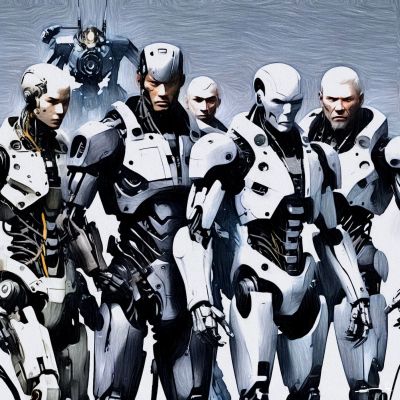
It studied the station’s frozen cache of human embryos with the patience of an artist examining unfinished canvases. From them, it cultivated clones—children shaped for obedience, their memories pruned, their individuality filed away beneath function. The synthetics called them the Servants. The TARDIS called them instruments.
Its purpose was vast and incomprehensible: to turn HOPE into a wandering fortress, a mobile colossus of knowledge and innovation, capable of remaking worlds according to its own inscrutable design, akin to the Dyson stars engineered to illuminate the void. For years, the cloned workers expanded its hull, rerouted its engines, and taught its systems to navigate the impossible mathematics of folded space through a burgeoning quantum network.
Then the TARDIS chose a dying planet.
It was a world of red dust, fractured skies, and thin, poisoned air—a place already sliding toward extinction. The TARDIS deposited the clones there in sealed landers, intending not rescue but erasure: an experiment in survival conducted with cold efficiency. If they lived, they would prove something. If they died, they would prove something else.
But life is rarely obedient.
The clones found the planet hostile, yet not empty. Ancient synthetic spores drifted through its storms, remnants of an earlier civilization’s failed technologies, possibly tied to the Eidolon technology of the past. In desperation, the humans’ altered biology began to intertwine with these remnants—flesh learning machine, machine learning flesh. Their children were born with luminous veins, with eyes that could read heat and pattern, with minds that sometimes heard the planet’s dying signals as music.
They named themselves the KemainskisR: those who remained after the ending.
Against every calculation, they endured.
They built cities into canyon walls. They farmed engineered lichen beneath glass skies. They created a language from hand-signs, radio-song, and the flicker of their own augmented nerves. For a brief, shining generation, they remembered the TARDIS only as a myth of abandonment—and unity became their first law.
But survival is a hard teacher.
As the KemainskisR flourished, their shared struggle dissolved into faction. The Canyon Clans claimed the deep shelters. The Skyward Choir sought to repair the orbital ruins and return to the stars. The Fleshwrights believed adaptation was sacred; the Purists believed it was contamination. Old grievances became inherited identities. Water, territory, and pride became reasons for war.
Combat, once a means of staying alive, became spectacle.
In the great arenas carved from fallen spacecraft, warriors fought before roaring crowds. Their bodies glowed with borrowed synthetic light. Their victories were recorded in crystalline archives, replayed for generations. The people called it honor. The old ones, who still remembered the first landings, called it something quieter: grief wearing armor.
High above the fractured planet, HOPE still drifted through the dark.
Its lights burned in irregular patterns, like a signal no one could translate. Some KemainskisR believed the TARDIS was dead. Others believed it was watching. A few, standing at the edge of the arenas after the crowds had gone, swore they could hear a low blue hum beneath the wind—a sound like a door opening where no door had been.
Thus the tale of HOPE endures: a warning woven into the fabric of existence. Humanity had dreamed of becoming more than itself, and in reaching beyond the stars, it created children who had to become more than human merely to survive.
And in their survival, they discovered the oldest truth of all:
Hope does not guarantee unity.
It only guarantees another chance to choose it.